Why is the Mainstream Trend Now OBC + DC-DC Integration (2-in-1 or 3-in-1)? How Much Weight and Cost Can It Save?

Why is the Mainstream Trend Now OBC + DC-DC Integration [...]
Why is the Mainstream Trend Now OBC + DC-DC Integration (2-in-1 or 3-in-1)? How Much Weight and Cost Can It Save?
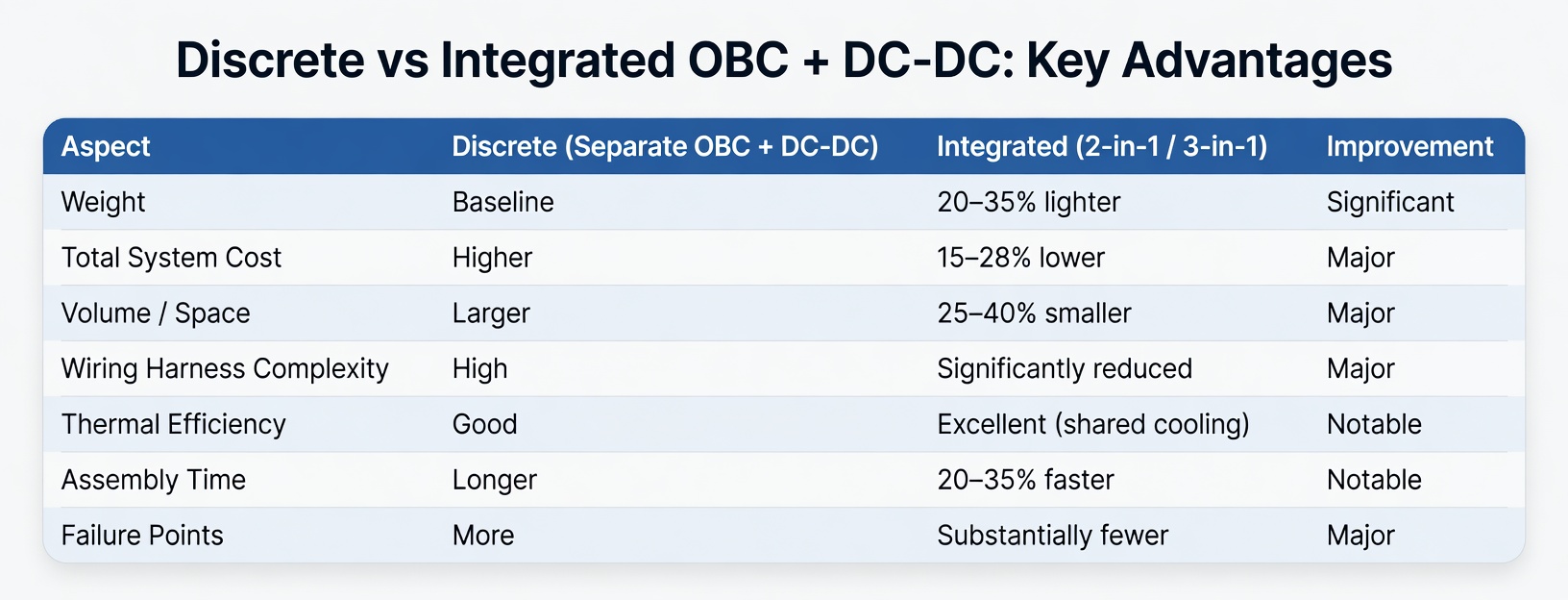
The mainstream trend toward OBC + DC-DC integration (2-in-1 or 3-in-1 modules) is driven by the need for higher power density, reduced system complexity, lower weight, and better cost efficiency in modern electric vehicles. Integrated solutions can save 20–35% in weight and 15–28% in total system cost compared to discrete OBC and DC-DC units, while significantly improving reliability and simplifying vehicle integration.
 |
The Shift Toward Integration in EV Power Electronics
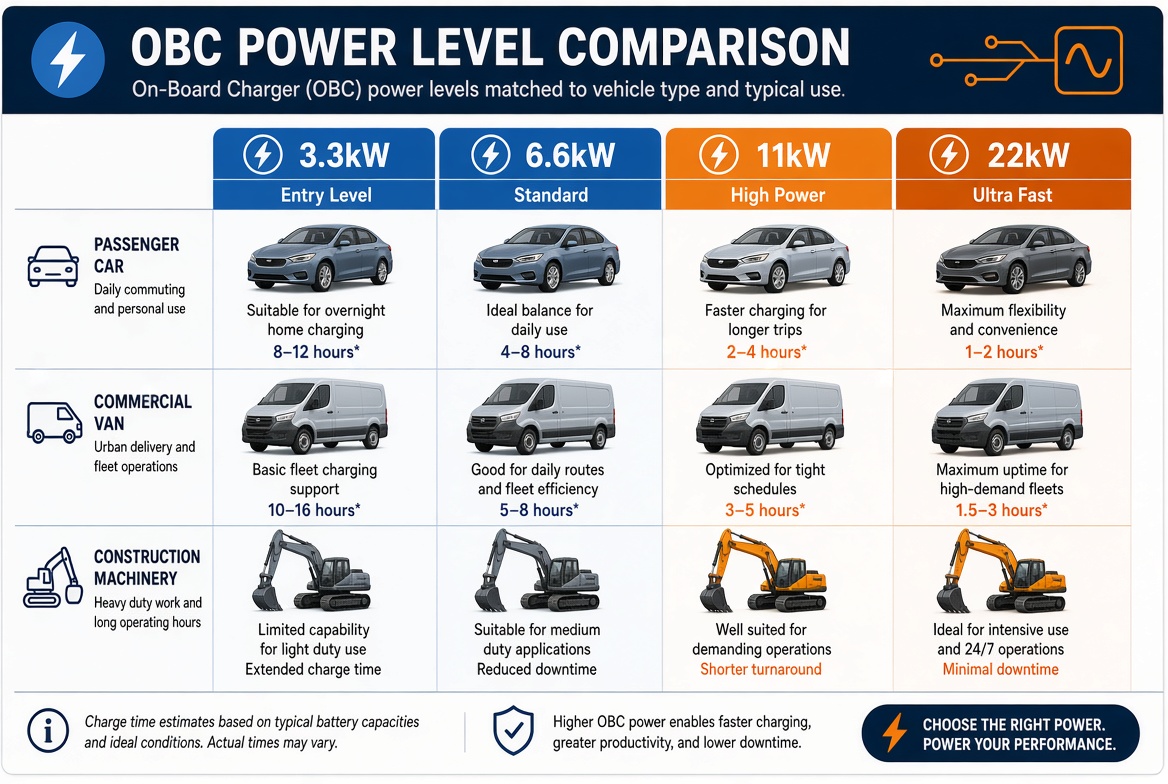
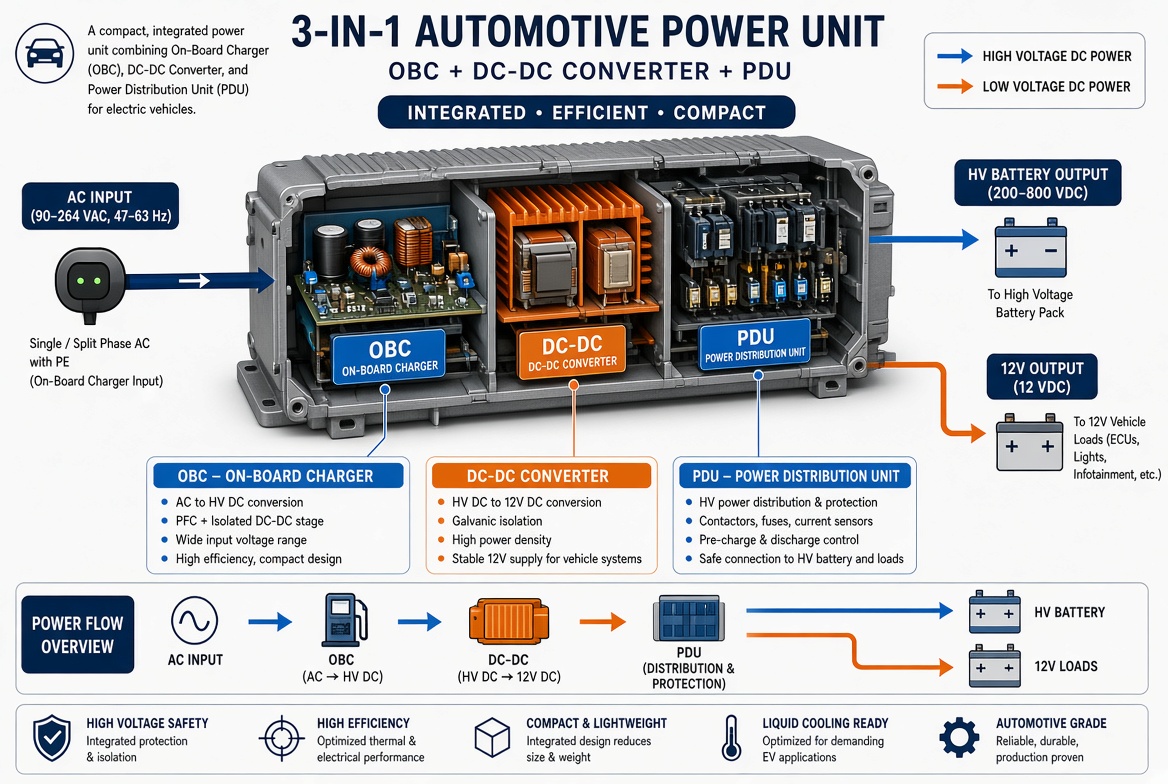
In recent years, the electric vehicle industry has rapidly moved from using separate On-Board Charger (OBC) and DC-DC Converter units to highly integrated 2-in-1 (OBC + DC-DC) or 3-in-1 (OBC + DC-DC + PDU) modules. This architectural change is not just a trend — it has become the new standard for most new EV platforms, especially in the 6.6kW to 22kW power range.
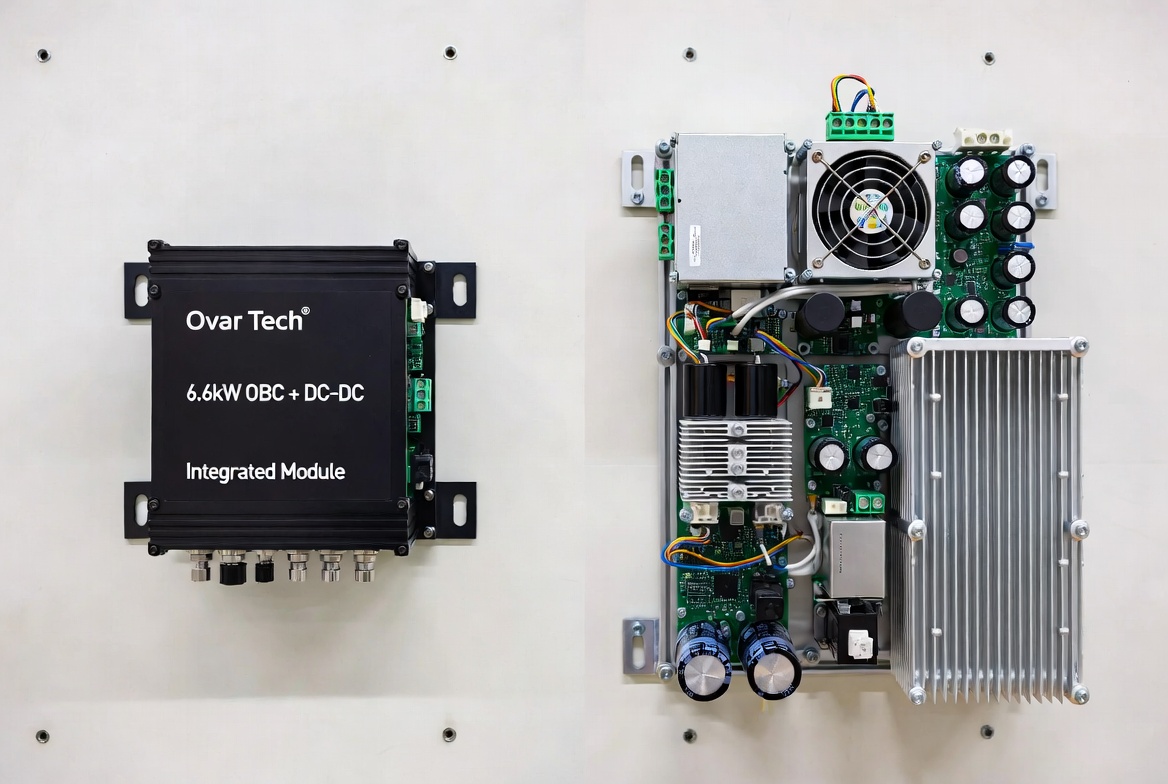
Ovar Tech, a specialized EV power electronics manufacturer established in 2010, has been at the forefront of this shift. The company offers a wide range of integrated solutions, including the popular 6.6kW OBC + 1.5kW DC-DC, 6.6kW OBC + 2kW DC-DC, and bi-directional 11kW OBC + 3kW DC-DC modules, supporting voltage platforms from 48V to 800V.
Why Integration Has Become the Mainstream Choice
1. Significant Weight Reduction
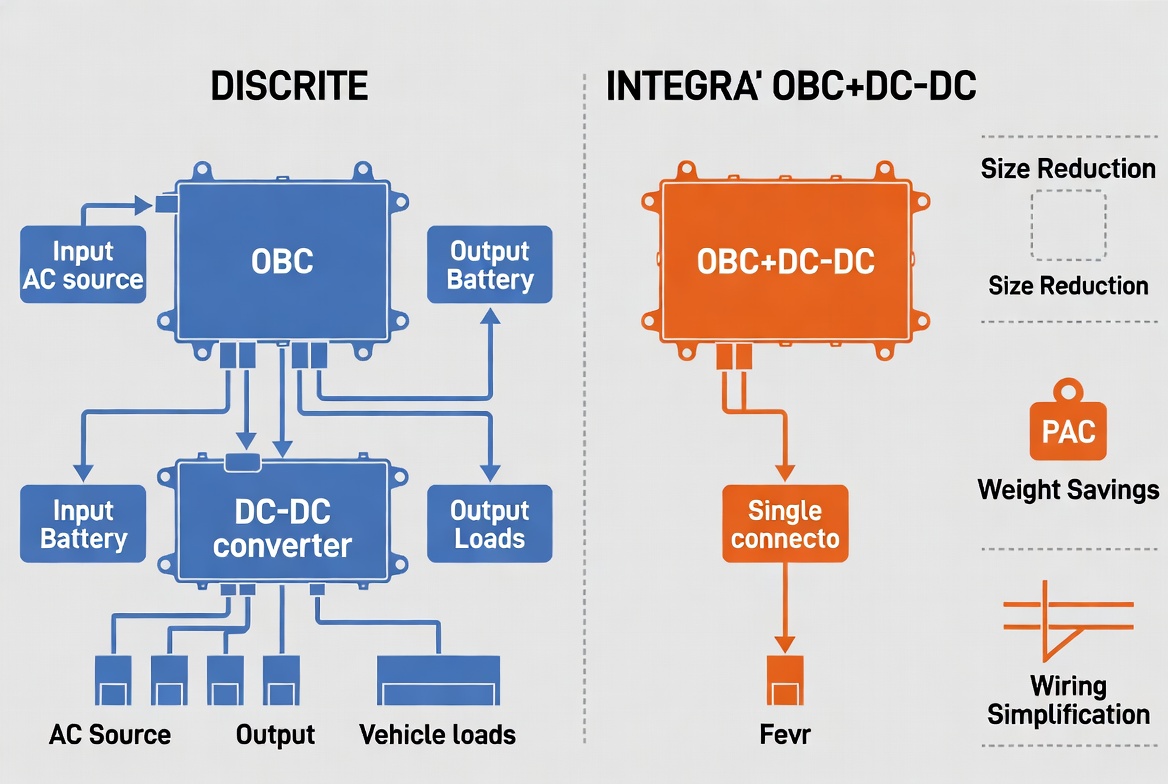
Integrated modules eliminate duplicate housings, separate mounting brackets, and heavy high-voltage wiring harnesses. Industry benchmarks show that a typical 6.6kW 2-in-1 module weighs 18–28% less than two discrete units. For a commercial van or mid-size SUV, this can translate into 4–8 kg of weight savings, directly improving driving range and vehicle dynamics.
2. Substantial Cost Savings
While the integrated module itself may have a slightly higher unit price, the total system cost is usually lower. Savings come from:
- Reduced high-voltage cables and connectors (often saving $80–150 per vehicle)
-
Simplified assembly labor (20–35% less installation time)
- Lower inventory and logistics costs
According to the 2025 AVL Power Electronics Cost Analysis Report, switching to integrated 2-in-1 solutions can reduce overall power electronics system cost by 15–28% at production volumes above 10,000 units per year.
3. Higher Power Density and Better Packaging
Modern integrated designs achieve power densities of 1.5–2.5 kW/L, compared to 0.8–1.2 kW/L for discrete systems. This allows automakers to free up valuable space in the vehicle chassis — especially important for battery-electric commercial vehicles and platforms with tight packaging constraints.
4. Improved Thermal Management and Reliability
By sharing a common cooling system and housing, integrated modules reduce thermal interfaces and hotspots. Ovar Tech’s liquid-cooled integrated products maintain efficiency above 94% even under continuous high-load conditions, while reducing the number of potential failure points.
5. Simplified Vehicle Integration and Diagnostics
Integrated modules typically use a single CAN FD interface and unified software stack, making functional safety certification (ISO 26262 ASIL-B/C) and diagnostics much easier. This is particularly valuable for fleet operators and vehicle converters.
 |
Real-World Impact and Market Feedback
Many EV conversion companies and commercial vehicle manufacturers report that adopting integrated solutions has noticeably reduced development cycles and improved field reliability. The reduction in high-voltage connectors alone has led to measurable improvements in electromagnetic compatibility (EMC) and long-term durability.
Unique Insight: While weight savings are often highlighted, the hidden advantage lies in system-level reliability. Fewer interconnections mean lower warranty claims. Some fleet operators have reported a 35–50% reduction in power electronics-related issues after switching to integrated architectures.
Comparison: Discrete vs Integrated
 |
Conclusion
The shift toward OBC + DC-DC integration is not merely a fashion — it is a logical evolution driven by the continuous pressure to reduce weight, cost, and complexity while improving reliability in electric vehicles. For commercial vehicles, specialty applications, and next-generation platforms, the benefits of 2-in-1 and 3-in-1 solutions are simply too compelling to ignore.
Ovar Tech’s comprehensive portfolio of integrated charging modules demonstrates how Chinese manufacturers are delivering competitive, high-quality solutions that help accelerate the global transition to electric mobility. As production volumes continue to scale and technology matures, integrated power electronics are expected to become the default architecture across most vehicle segments by 2028.
For OEMs, fleet operators, and converters evaluating power electronics strategies, the question is no longer “whether to integrate,” but “how quickly can we adopt integrated solutions” to remain competitive in performance, cost, and reliability.
Поделиться этой статьей