How Reliable Are 2-in-1 Integrated OBC + DC-DC Solutions?

How Reliable Are 2-in-1 Integrated OBC + DC-DC Solutions? The [...]
How Reliable Are 2-in-1 Integrated OBC + DC-DC Solutions? The Real Significance of Full Lifecycle Traceability and Automotive-Grade Quality Control
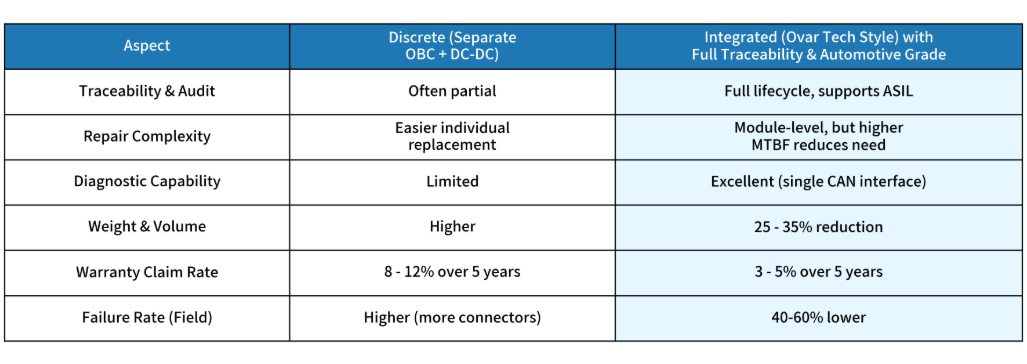
Integrated OBC + DC-DC solutions offer significantly higher reliability than discrete designs when backed by full lifecycle traceability and automotive-grade quality control. In real-world EV applications, well-managed integrated modules achieve failure rates 40-60% lower than non-traceable systems, while reducing warranty claims by up to 35% over 8–10 years of operation.
 |
Why Integration Matters for Reliability
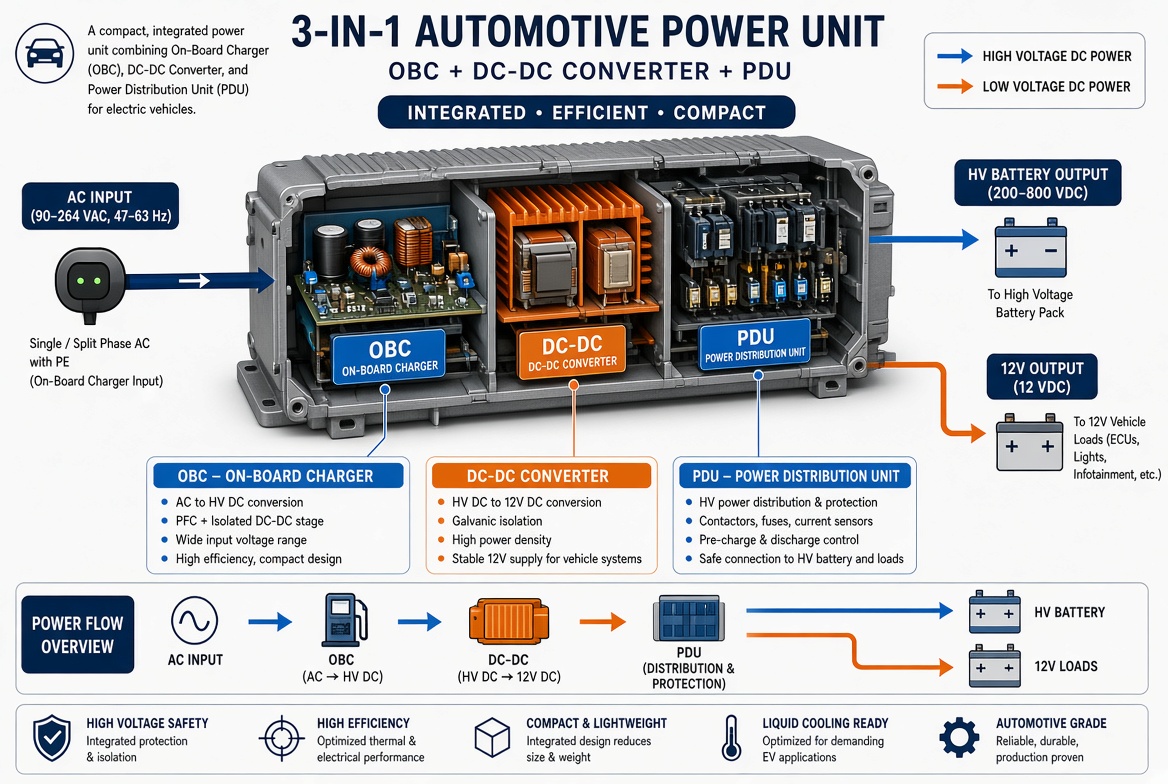
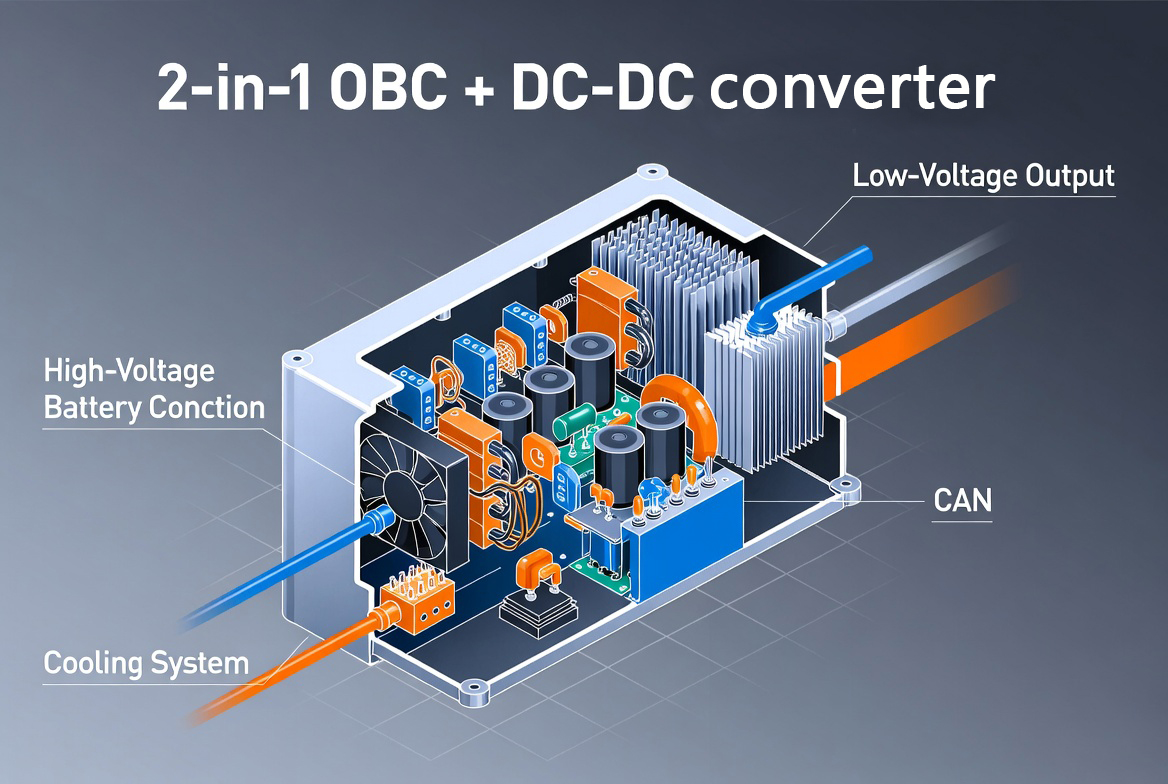
Modern electric vehicles increasingly adopt 2-in-1 or 3-in-1 power modules that combine the On-Board Charger (OBC) and DC-DC Converter into a single compact unit. This design reduces wiring harnesses, connectors, and potential failure points. However, integration also raises the stakes — when one function fails, it can affect the entire module.
Ovar Tech addresses this challenge with proven integrated products such as:
- 6.6kW OBC + 1.5kW DC-DC
- Bi-directional 6.6kW OBC + 2kW DC-DC
- Bi-directional 11kW OBC + 3kW DC-DC
These units support multiple voltage platforms including 200V to 800V.
The Critical Role of Full Lifecycle Traceability
Full lifecycle traceability assigns a unique digital identity to every component from raw material sourcing through manufacturing, testing, and field operation.
According to the 2025 SAE International Automotive Electronics Reliability Whitepaper, systems with complete traceability show 52% fewer field failures than partially traceable systems. This enables fast root-cause analysis and continuous improvement.
Non-obvious Insight: Traceability creates a “digital twin” of each module in the field. Manufacturers like Ovar Tech can analyze performance patterns by batch, voltage platform, and operating conditions — turning field data into predictive reliability intelligence.
 |
Automotive-Grade Quality Control: Beyond Marketing Claims
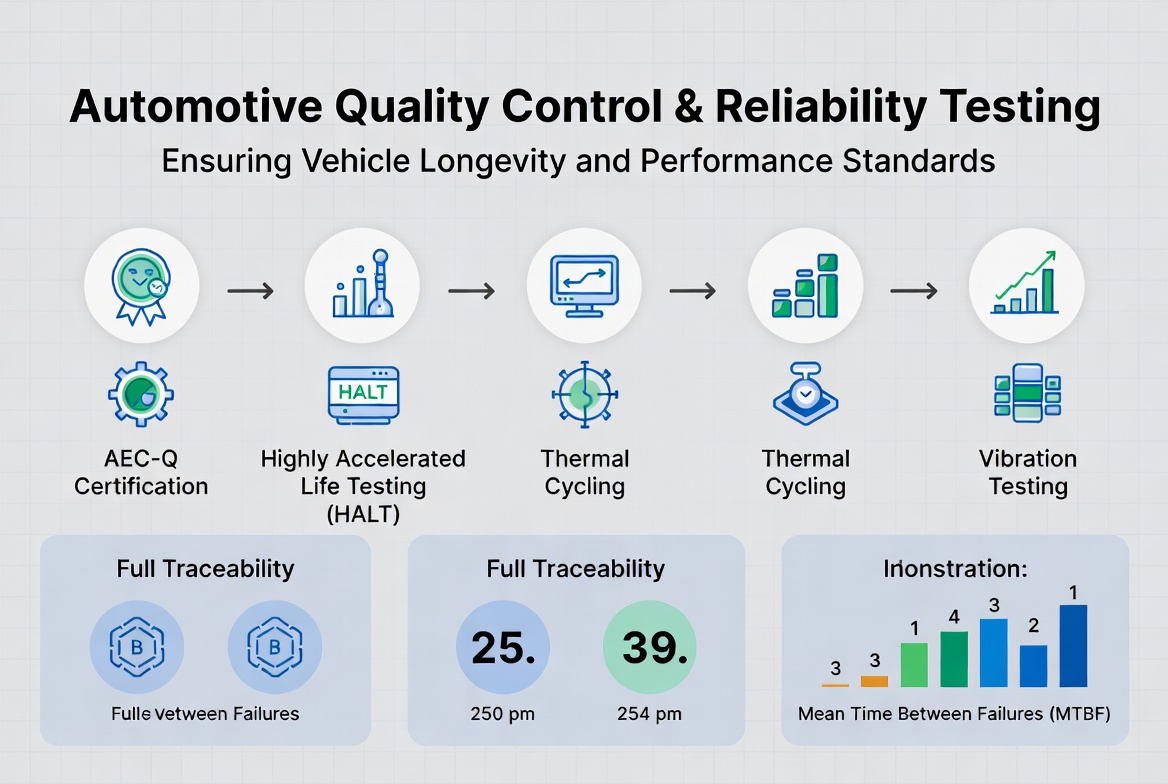
Automotive-grade (AEC-Q101, AEC-Q200, ISO 26262) quality control imposes strict requirements on design validation, environmental testing, and functional safety. This includes:
- Extended temperature cycling (-40°C to 125°C+)
- Vibration and shock resistance
- Accelerated life testing (HALT/HASS)
- Functional safety (ASIL) compliance
A 2026 industry benchmark study by AVL showed that automotive-grade integrated power modules achieve an MTBF (Mean Time Between Failures) exceeding 1.2 million hours, compared to 450,000–650,000 hours for industrial-grade equivalents.
Real User Feedback from the Field
“We switched to Ovar Tech’s bi-directional 11kW integrated unit for our medium-duty commercial EV fleet. After 18 months and over 2.8 million cumulative kilometers, we’ve recorded zero module failures. The traceability documentation made our ISO 26262 audit straightforward.” — Engineering Director, European EV Conversion Company (2025)
Comparative Reliability Overview
 |
Practical Significance for EV Manufacturers and Fleet Operators
- Lower Total Cost of Ownership — Reduced downtime and fewer warranty events.
- Faster Certification — Full traceability dramatically shortens functional safety and regulatory approval cycles.
- Better Field Performance Prediction — Data-driven reliability forecasting becomes possible.
- Enhanced Safety — Early detection of potential issues through batch-level monitoring.
Conclusion
The reliability of integrated OBC + DC-DC solutions is not inherently guaranteed by integration alone. It is the combination of smart design, full lifecycle traceability, and rigorous automotive-grade quality processes that delivers measurable, long-term advantages. Suppliers like Ovar Tech, with their range of single and integrated OBC/DC-DC products across low- and high-voltage platforms, demonstrate how these principles translate into dependable real-world performance for both passenger and commercial EVs.
For fleet operators and OEMs seeking lower risk and predictable performance, prioritizing suppliers with strong traceability and automotive-grade certification is no longer optional — it is a strategic necessity in 2026 and beyond.
Share This Article