Single OBC vs Integrated OBC (OBC + DC-DC): What’s the Difference? What Are the Advantages of the Integrated Solution?

Single OBC vs Integrated OBC (OBC + DC-DC): What’s the [...]
Single OBC vs Integrated OBC (OBC + DC-DC): What’s the Difference? What Are the Advantages of the Integrated Solution?
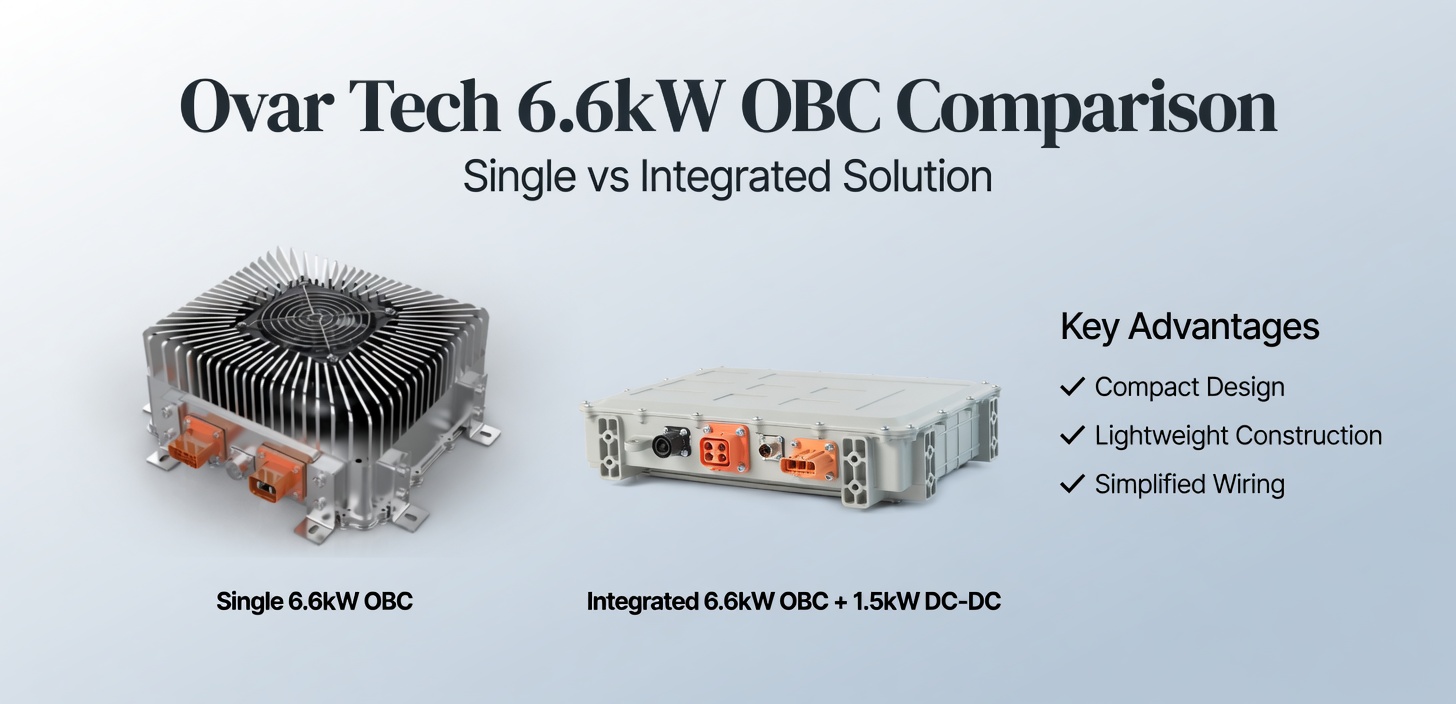
The fundamental difference is that a Single OBC only converts AC grid power to DC for charging the high-voltage traction battery, whereas an Integrated OBC (OBC + DC-DC) combines the On-Board Charger and DC-DC Converter into one compact module, simultaneously handling both high-voltage battery charging and low-voltage auxiliary power conversion (typically 12V/24V/48V). Integrated solutions are gaining popularity due to their superior system integration, reduced complexity, and better overall efficiency.
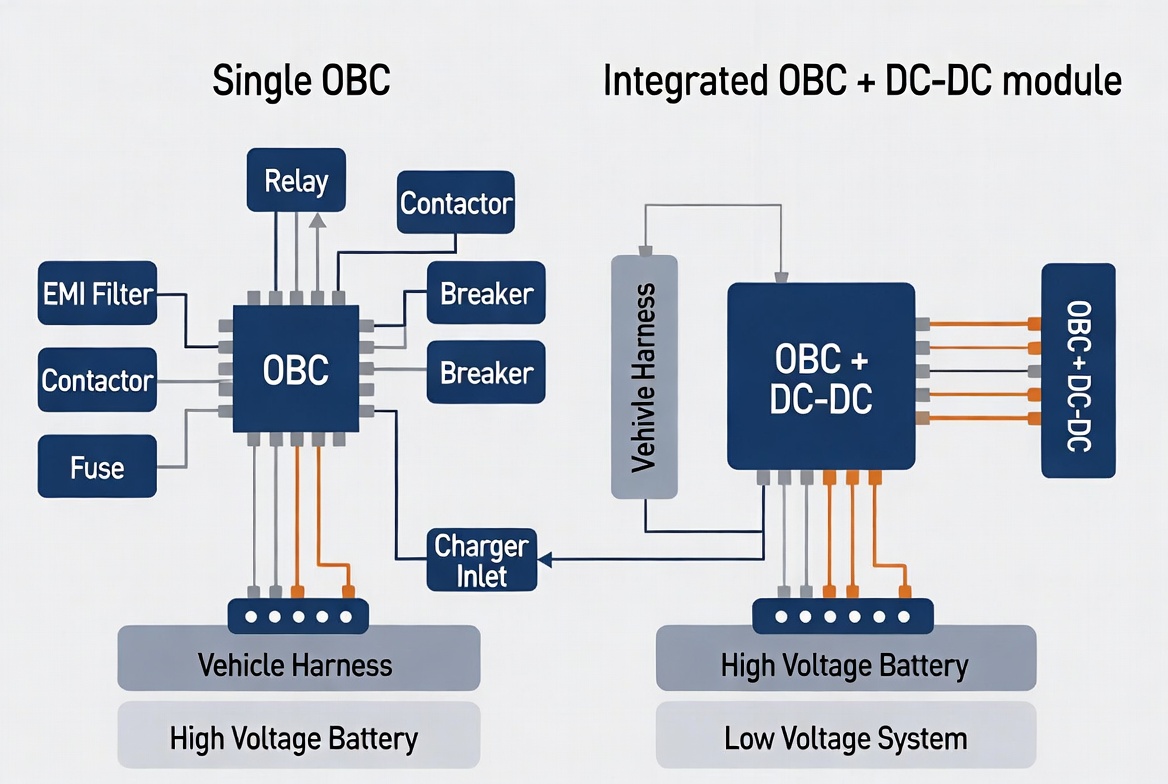 |
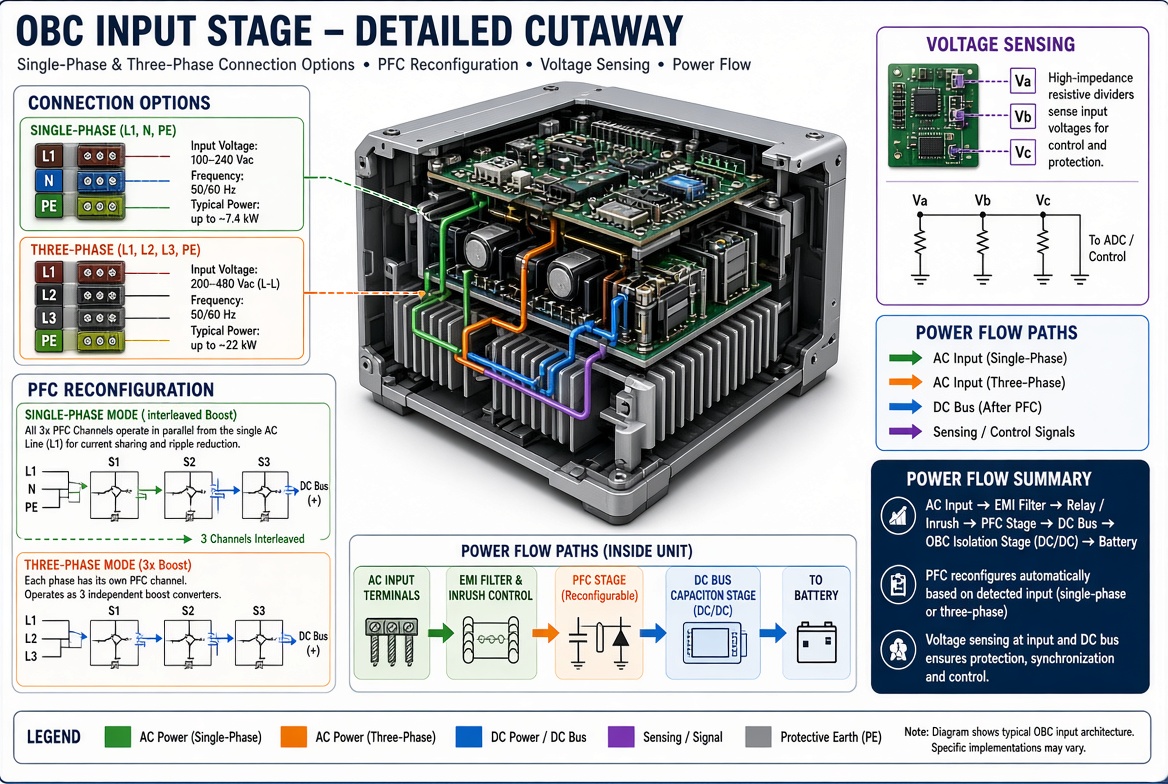
A Single OBC is essentially a unidirectional AC-DC rectifier with Power Factor Correction (PFC), typically using a two-stage topology: PFC stage + LLC or Phase-Shifted Full-Bridge resonant converter. It outputs high-voltage DC (360V–800V) to charge the main battery but has no direct low-voltage output.
In contrast, an Integrated OBC + DC-DC module shares a common high-voltage DC bus. After the AC-DC conversion, part of the power is routed through an isolated DC-DC stage (usually a CLLC or dual active bridge topology) to generate stable low-voltage output. This architecture allows for more efficient power distribution and better electromagnetic compatibility (EMC).
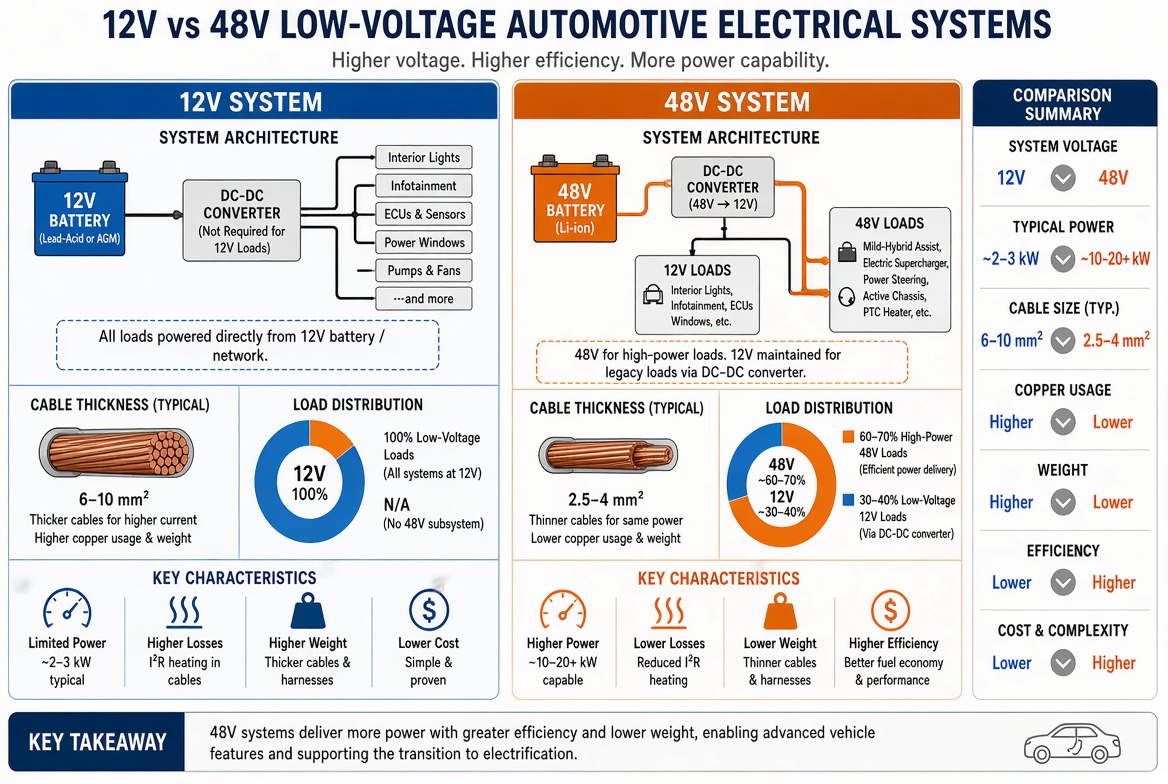
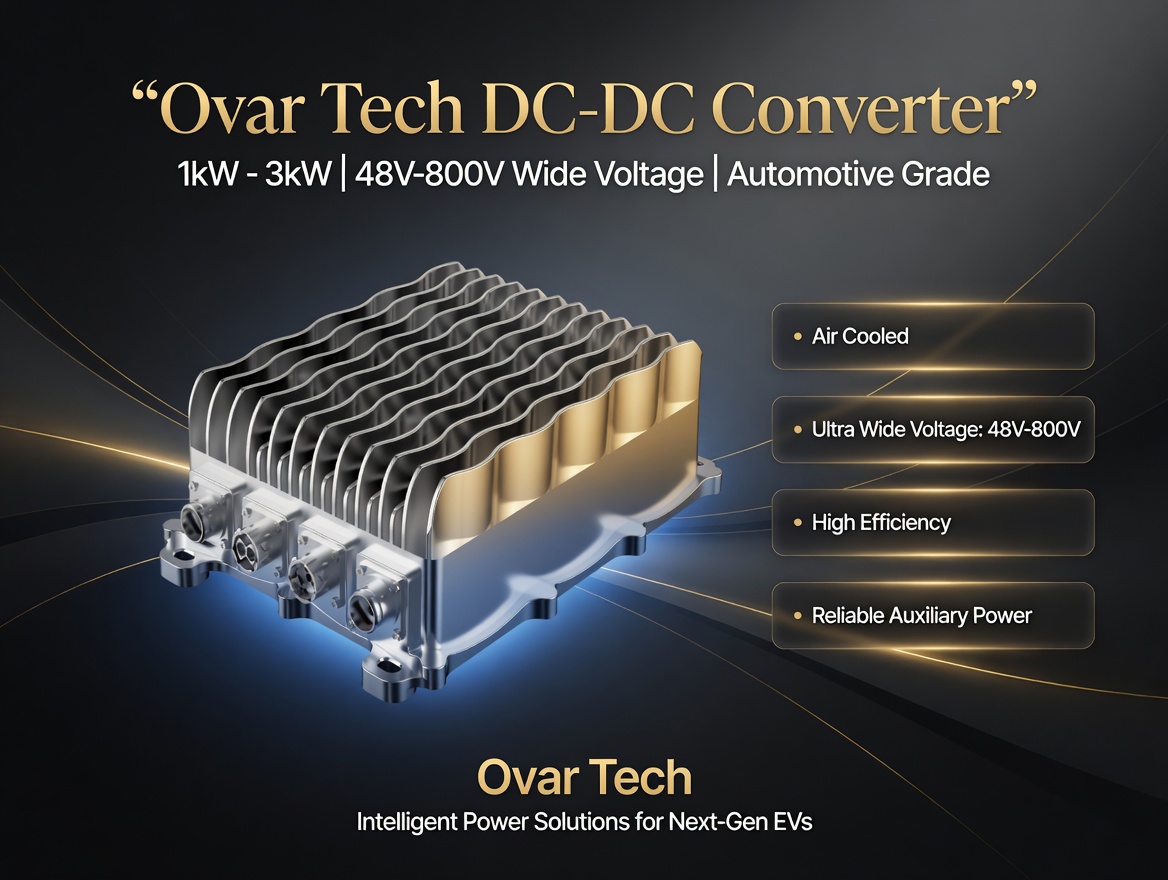
Technologie ovarienne, established in 2010 and specializing in automotive-grade EV power electronics, offers both types of solutions. Their integrated lineup includes popular models such as the 6.6kW OBC + 1.5kW DC-DC, 6.6kW OBC + 2kW DC-DC, and Bi-directional 11kW OBC + 3kW DC-DC, supporting wide voltage platforms from 48V to 800V.
Key Advantages of Integrated OBC Solutions
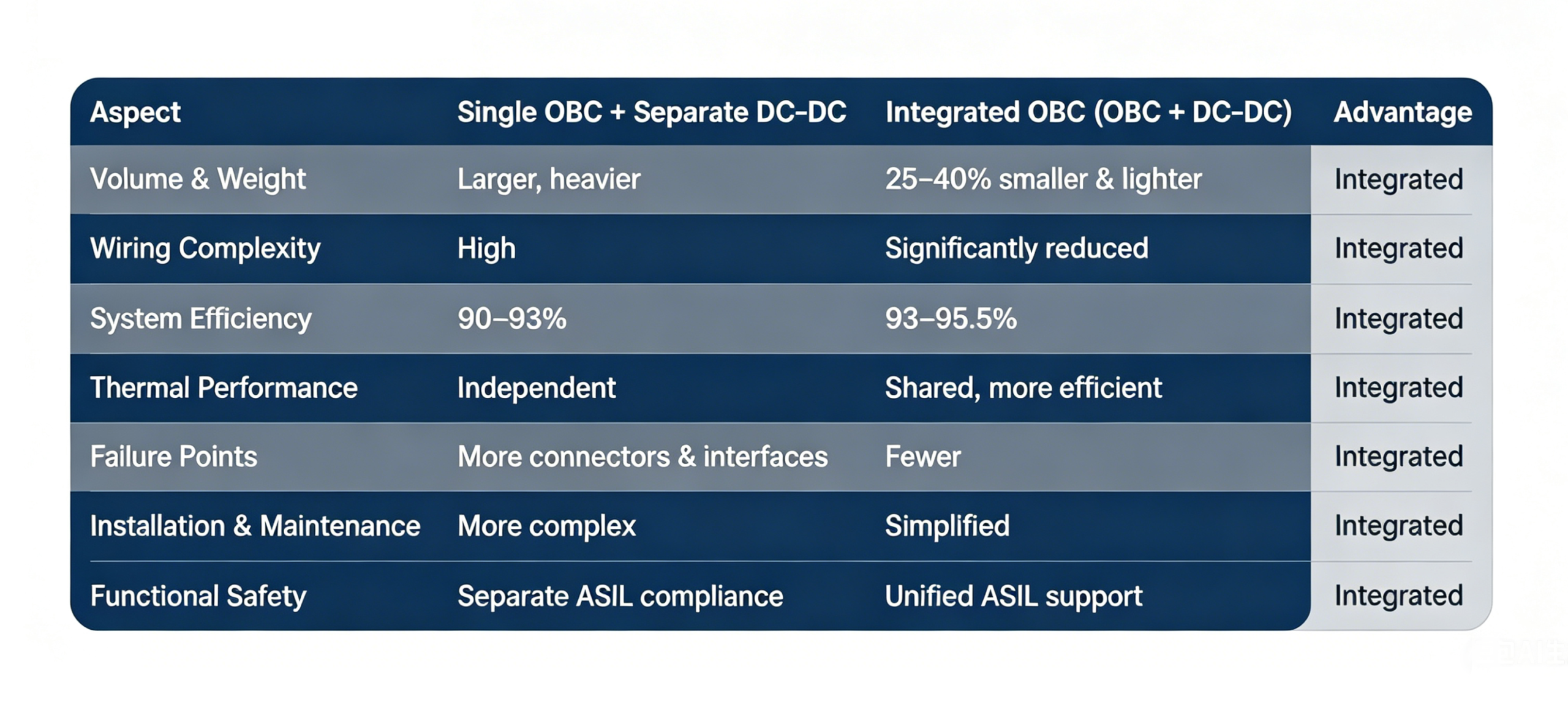
1. Higher Power Density and Compact Size Integrated modules achieve power densities often exceeding 1.2–1.8 kW/L, significantly higher than discrete systems. By sharing housing, heatsink, and cooling circuits, Ovar Tech’s integrated units can reduce overall volume by 30–40% and weight by 20–35%.
2. Reduced Wiring Harness and Failure Points Separate systems require multiple high-voltage connectors, heavy-duty cables, and complex interfacing. Integrated designs use fewer HV connections, lowering electromagnetic interference (EMI) and improving system reliability. Industry data indicates connection-related failures can be reduced by up to 50%.
3. Superior Thermal Management Both the OBC and DC-DC stages share the same cooling system (air-cooled or liquid-cooled). This enables better heat dissipation and more stable performance under high ambient temperatures. Ovar Tech’s liquid-cooled integrated models maintain efficiency above 94% even at full load.
4. Improved System Efficiency and Lower Losses Sharing a common DC bus reduces conversion stages and circulating currents. Many integrated solutions achieve overall system efficiency of 93–95.5%, compared to 90–93% for separate OBC + DC-DC combinations.
5. Simplified Vehicle Integration and Diagnostics Integrated modules typically communicate via a single CAN FD interface, supporting unified diagnostics, OTA updates, and functional safety (ASIL-B/C). This greatly simplifies integration for vehicle manufacturers and converters.
6. Better Cost Efficiency in Volume Production While single units may appear cheaper individually, the total system cost (including harnesses, mounting brackets, and labor) is often lower with integrated solutions.
 |
Comparison Table
 |
When to Choose Which Solution?
- Choose Single OBC when maximum design flexibility is needed, when replacing existing components, or in low-volume/specialty projects where individual optimization is preferred.
- Choose Integrated OBC for new platform development, fleet electrification projects, and applications with strict space and weight constraints. Ovar Tech’s integrated series is particularly favored by commercial vehicle converters and mid-volume EV manufacturers.
Conclusion
Integrated OBC + DC-DC solutions represent a clear evolution in EV power electronics architecture, offering meaningful improvements in integration, efficiency, reliability, and total cost of ownership. Ovar Tech’s range of single and integrated chargers, backed by automotive-grade quality control and wide voltage support, provides flexible options for different application needs. For most modern EV projects, especially in the 6.6kW to 11kW power range, integrated solutions are becoming the preferred choice.
Partager cet article