How to Solve Efficiency, Thermal Management, and EMI Issues in DC-DC Converters?

How to Solve Efficiency, Thermal Management, and EMI Issues in [...]
How to Solve Efficiency, Thermal Management, and EMI Issues in DC-DC Converters?
Efficiency, thermal management, and electromagnetic interference (EMI) are the three most critical challenges in DC-DC Converter design. Modern solutions typically achieve 94–96% efficiency, use advanced liquid or high-performance air cooling, and meet stringent CISPR 25 Class 3 or higher EMI standards through careful topology selection, filtering, and shielding. Proper engineering in these areas is essential for reliability, especially in commercial vehicles, industrial equipment, and marine applications.
 |
1. Improving Efficiency
DC-DC Converter efficiency is primarily determined by topology, component selection, and switching frequency.
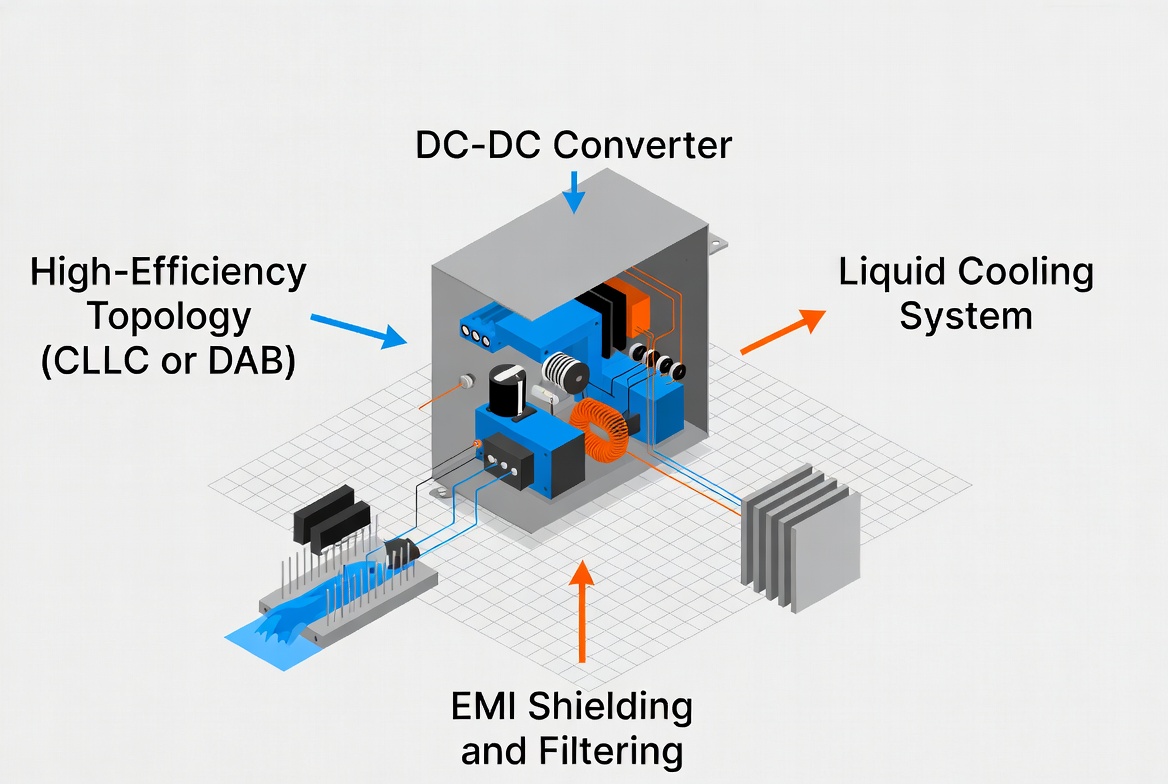
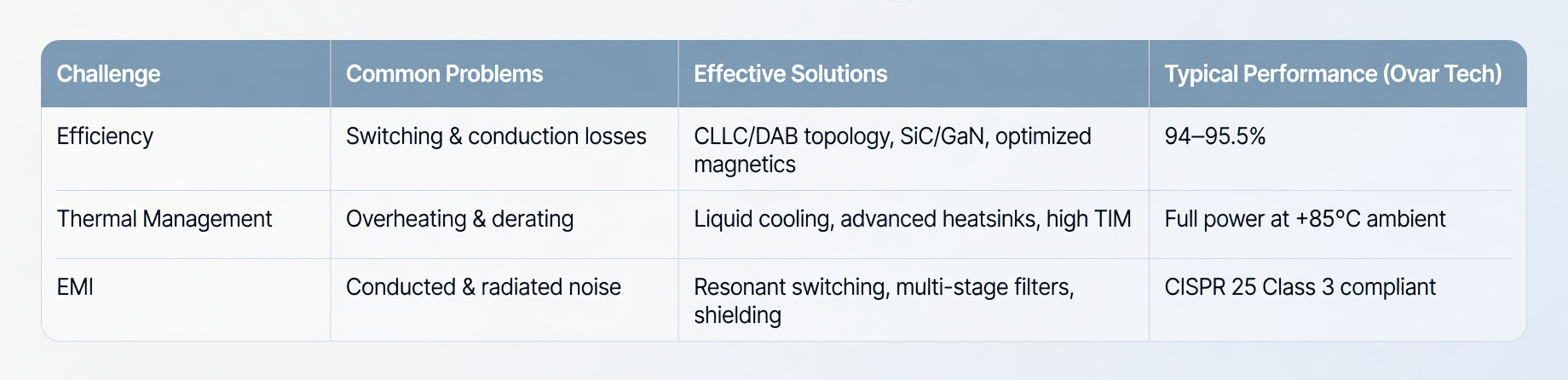
- Advanced Topologies: Traditional buck converters have been largely replaced by resonant topologies such as CLLC or Dual Active Bridge (DAB), which significantly reduce switching losses. Ovar Tech’s latest 2kW and 3kW DC-DC converters utilize CLLC resonant topology to achieve peak efficiency of 95.5%.
- Wide Bandgap Semiconductors: Using Silicon Carbide (SiC) or Gallium Nitride (GaN) MOSFETs instead of traditional silicon devices allows higher switching frequencies (up to 500kHz) while maintaining low conduction losses.
- Optimized Magnetic Design: Low-loss ferrite cores and litz wire windings minimize core and copper losses.
In real-world operation, every 1% efficiency improvement can save substantial energy over the vehicle’s lifetime, particularly in high-duty-cycle commercial applications.
2. Thermal Management Solutions
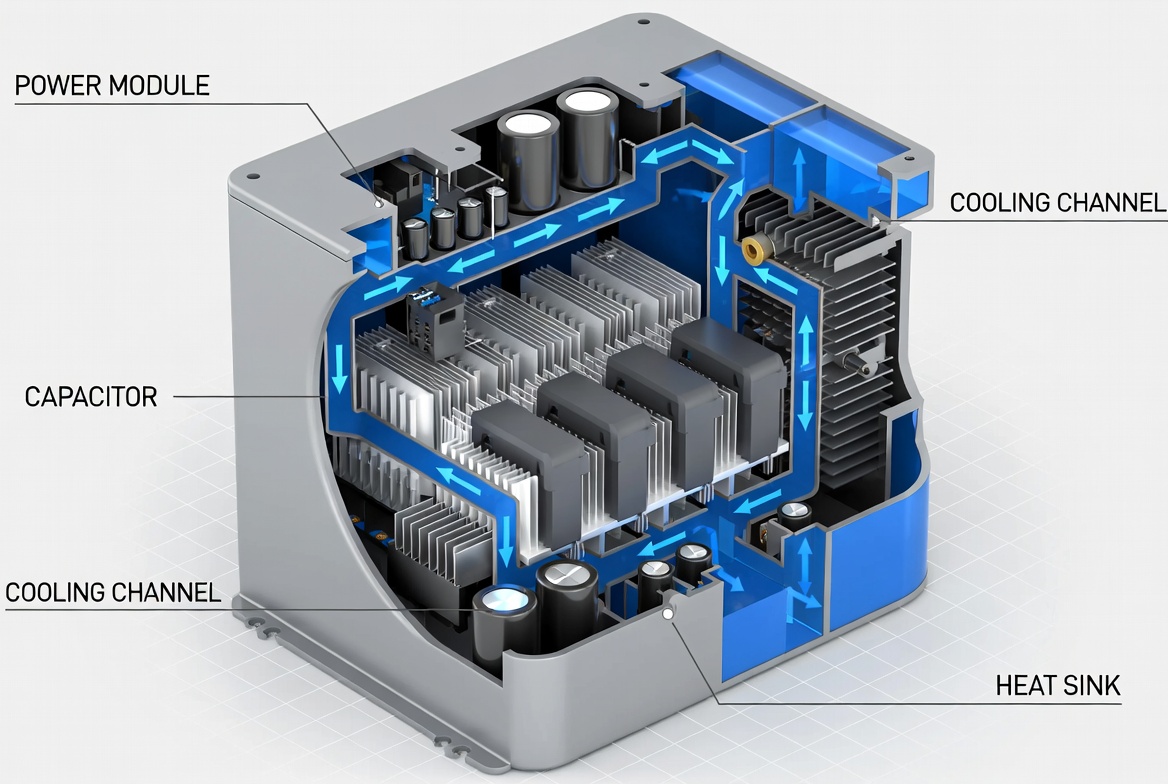
Effective heat dissipation is crucial because even 5% power loss in a 3kW converter generates 150W of heat that must be managed.
Common Solutions Include:
- Liquid Cooling: Preferred for high-power and harsh environments. Ovar Tech’s integrated modules often use liquid cooling channels integrated into the baseplate, maintaining junction temperatures below 105°C even at full load in 50°C ambient conditions.
- Advanced Air Cooling: Optimized heatsink designs with high-density pin-fin or wavy-fin structures, combined with intelligent variable-speed fans.
- Thermal Interface Materials (TIM): High-conductivity gap fillers and phase-change materials reduce thermal resistance between components and the housing.
Proper thermal design not only extends component lifespan but also prevents derating, ensuring full power output across a wide temperature range (-40°C to +85°C).
 |
3. Electromagnetic Interference (EMI) Mitigation
DC-DC converters are major sources of conducted and radiated EMI due to high-speed switching.
Effective EMI Control Strategies:
- Input and Output Filtering: Multi-stage LC filters and common-mode chokes suppress conducted emissions.
- Shielding: Full metal enclosures and strategic grounding reduce radiated EMI.
- Soft Switching Techniques: Resonant topologies like those used in Ovar Tech products naturally reduce dv/dt and di/dt, lowering EMI generation at the source.
- PCB Layout Optimization: Careful separation of power and control traces, ground planes, and component placement.
Ovar Tech’s commercial and marine-grade DC-DC converters are designed to meet CISPR 25 Class 3 standards, making them suitable for vehicles with sensitive communication and navigation systems.
Ovar Tech’s Approach to These Challenges
As a specialized manufacturer with over 15 years of experience, Ovar Tech integrates advanced solutions across its product line. Their 1.5kW–3kW DC-DC converters and integrated OBC + DC-DC modules combine high-efficiency resonant topologies, robust thermal designs, and comprehensive EMI suppression, making them popular choices for commercial vehicle fleets and marine applications.
Summary of Solutions
 |
Conclusion
Solving efficiency, thermal, and EMI issues in DC-DC Converters requires a holistic engineering approach — from topology selection and component choice to advanced cooling and careful layout. Integrated solutions from manufacturers like Ovar Tech demonstrate how these challenges can be effectively addressed while delivering compact, reliable, and cost-effective performance for demanding applications in commercial vehicles, industrial machinery, and yachts.
For engineers and fleet operators, prioritizing suppliers that excel in all three areas is key to achieving long-term reliability and lowest total cost of ownership in electrified platforms.
این مقاله را به اشتراک بگذارید