DC-DC Converter Efficiency, Thermal Management, and EMI Issues: How to Solve Them Effectively in 2026?

DC-DC Converter Efficiency, Thermal Management, and EMI Issues: How to [...]
DC-DC Converter Efficiency, Thermal Management, and EMI Issues: How to Solve Them Effectively?
Efficiency, thermal management, and electromagnetic interference (EMI) represent the three core technical challenges in modern DC-DC Converter design. Leading solutions achieve 94–96% peak efficiency, utilize advanced resonant topologies combined with wide-bandgap semiconductors, implement robust liquid or high-performance air cooling systems, and comply with strict automotive EMI standards such as CISPR 25 Class 3 or higher. These optimizations ensure reliable operation in demanding applications like commercial vehicles, industrial equipment, and marine systems.
 |
1. Enhancing Efficiency in DC-DC Converters
Efficiency is critical because even small losses translate into significant energy waste, reduced range, and increased operating costs in electrified platforms. Traditional hard-switching topologies suffer from high switching losses, especially at elevated frequencies.
Key Solutions Include:
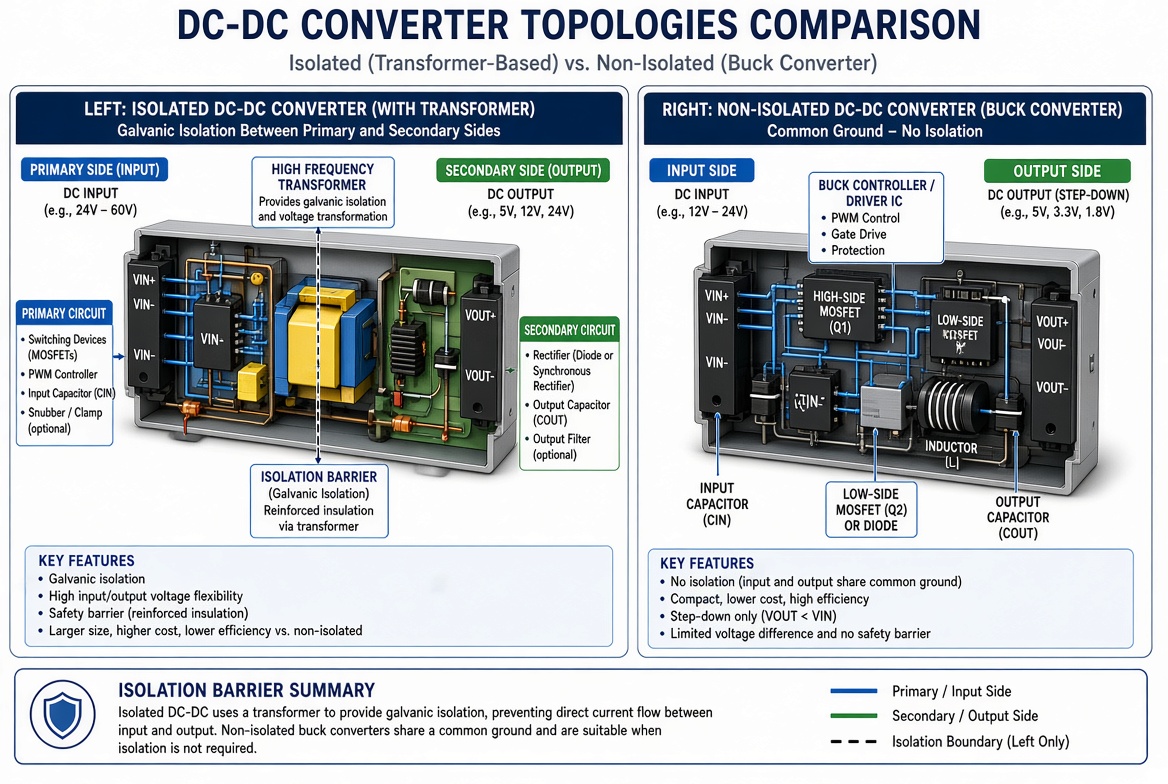
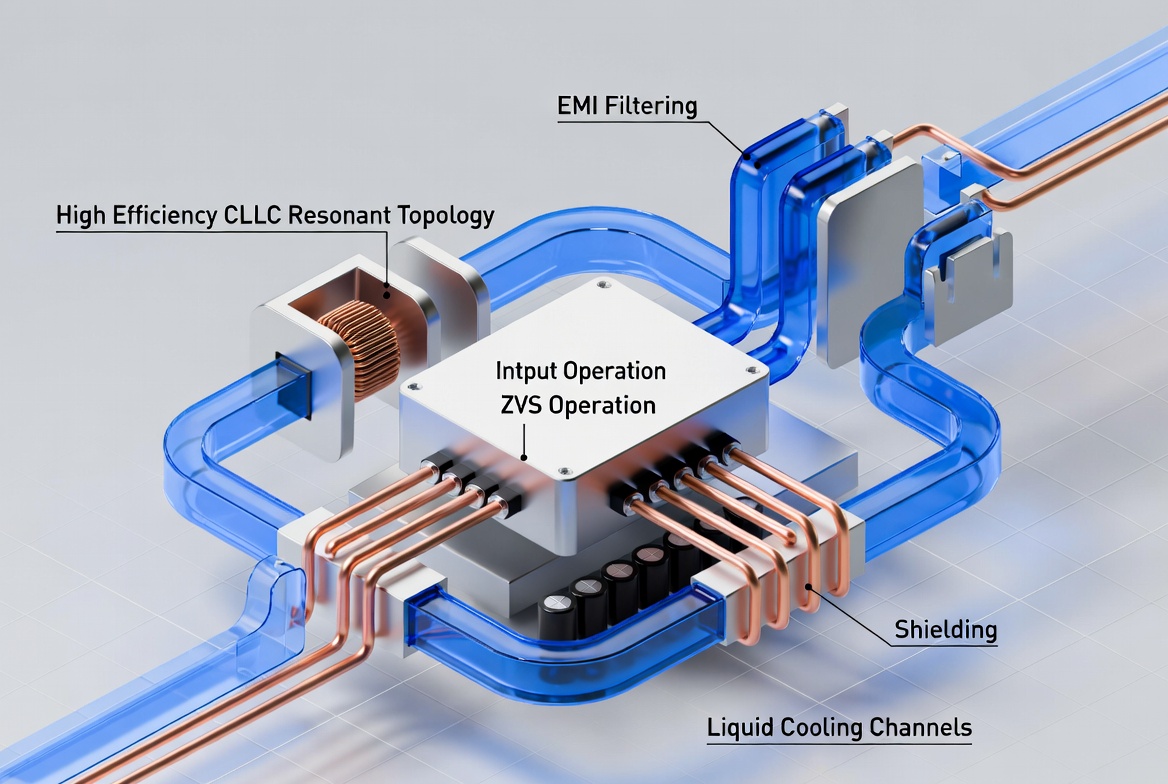
- Resonant Topologies: CLLC and Dual Active Bridge (DAB) resonant converters dramatically reduce switching losses by achieving zero-voltage switching (ZVS) and zero-current switching (ZCS).
- Wide Bandgap Devices: Silicon Carbide (SiC) and Gallium Nitride (GaN) MOSFETs enable higher switching frequencies (200–500 kHz) with lower conduction and switching losses compared to traditional silicon IGBTs or MOSFETs.
- Optimized Magnetic Components: Advanced planar transformers, low-loss ferrite cores, and litz wire windings minimize core losses and copper losses.
Ovar Tech’s 1kW to 3kW stand-alone DC-DC Converters employ CLLC resonant topology and SiC devices, consistently delivering peak efficiency up to 95.5% across a wide input voltage range (48V–800V) and output of 12V/24V. This high efficiency helps customers achieve better overall system energy performance and lower thermal stress.
2. Advanced Thermal Management Strategies
Power losses, even at 4–6%, generate substantial heat in high-power DC-DC units. Effective thermal management prevents component derating, extends lifespan, and maintains consistent performance in harsh environments (-40°C to +85°C).
Proven Thermal Solutions:
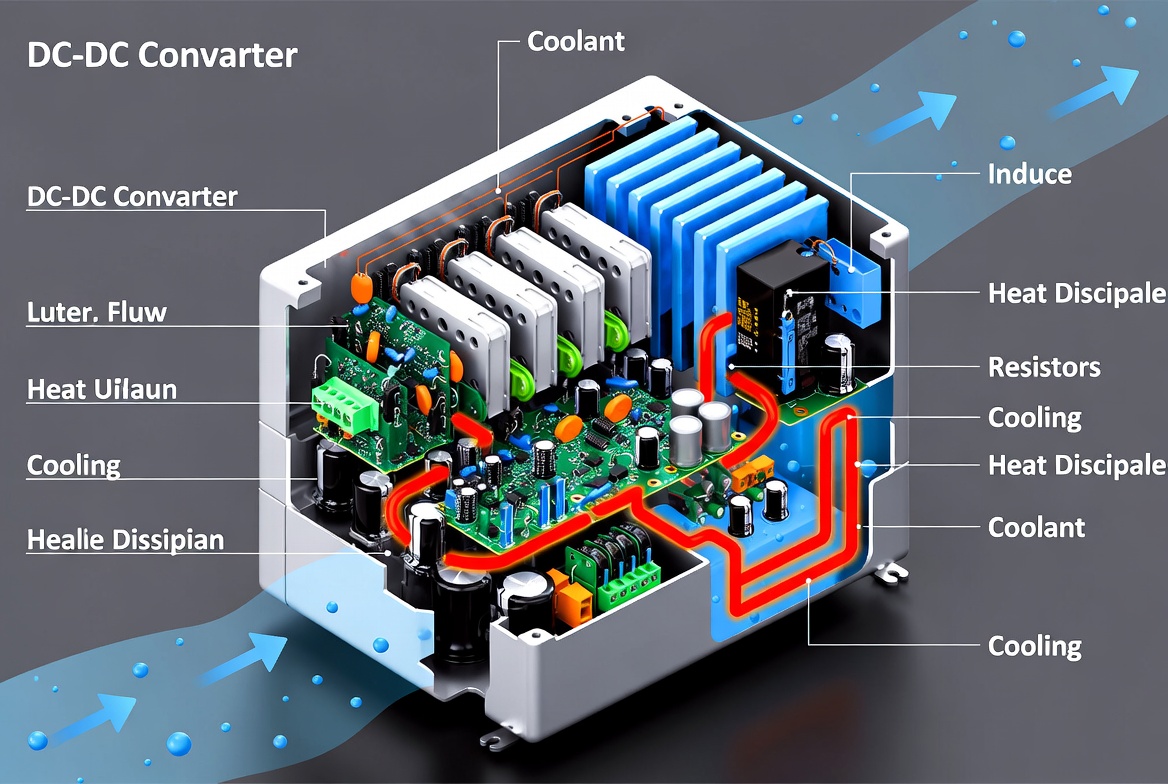
- Liquid Cooling Systems: Integrated cooling channels in the baseplate provide excellent heat dissipation for high-power density designs.
- Advanced Air Cooling: Optimized pin-fin or wavy-fin heatsinks paired with intelligent variable-speed fans deliver reliable performance in air-cooled configurations.
- High-Performance Materials: Premium thermal interface materials (TIM), phase-change pads, and direct-bonded copper (DBC) substrates reduce thermal resistance.
Ovar Tech’s air-cooled DC-DC converters feature carefully engineered fin structures that maintain full rated power output even in high ambient temperatures, making them ideal for space-constrained or cost-sensitive applications in commercial vehicles and yachts.
 |
3. Mitigating Electromagnetic Interference (EMI)
High di/dt and dv/dt from fast switching make DC-DC converters significant sources of both conducted and radiated EMI, which can interfere with sensitive vehicle electronics, communication systems, and sensors.
Comprehensive EMI Control Approaches:
- Resonant Soft Switching: Naturally reduces EMI generation at the source.
-
Multi-Stage Filtering: Input/output LC filters and common-mode chokes suppress conducted emissions.
- Shielding and Layout Optimization: Full metal enclosures, strategic grounding, separated power/control planes, and careful PCB routing minimize radiated noise.
- Compliance Testing: Iterative design validation against CISPR 25 and ISO 11452 standards.
Ovar Tech’s Integrated Solutions
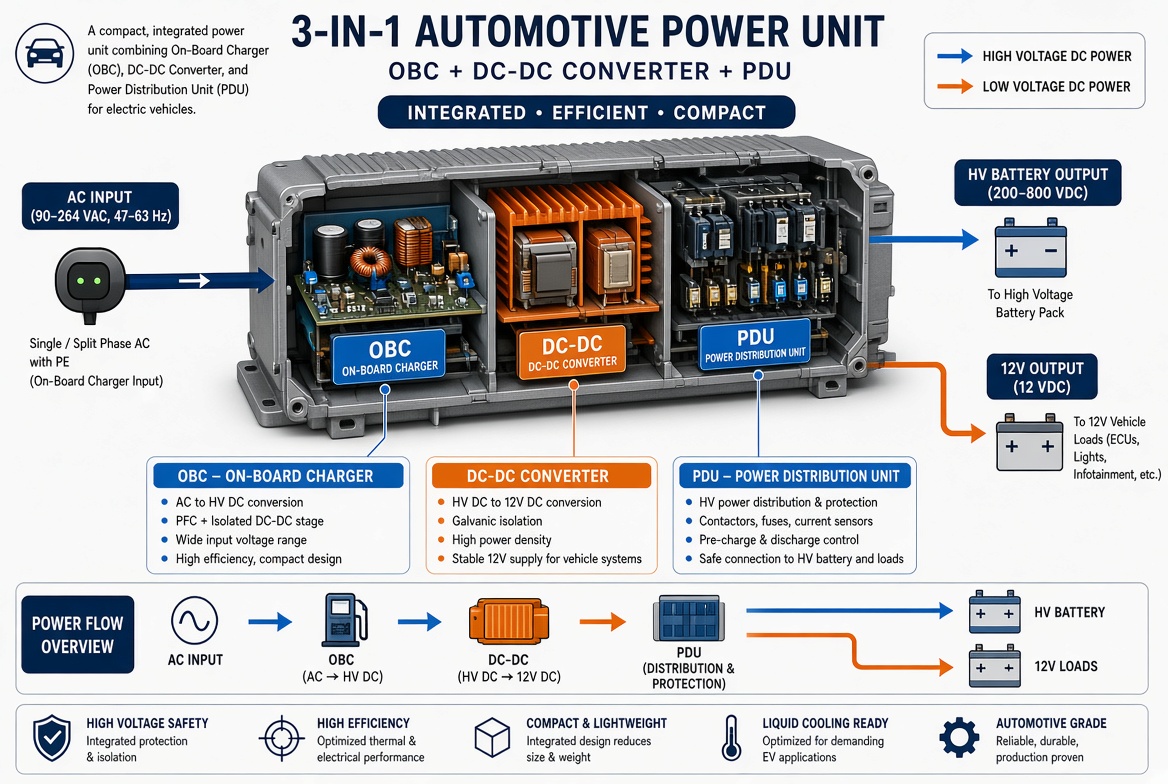
With a strong focus on automotive-grade reliability, Ovar Tech offers both stand-alone DC-DC converters (1–3kW) and integrated OBC + DC-DC modules. Their designs combine high efficiency, robust thermal performance, and superior EMI control in compact, lightweight packages. These solutions are particularly popular in commercial fleet electrification and marine applications where reliability and space efficiency are paramount.
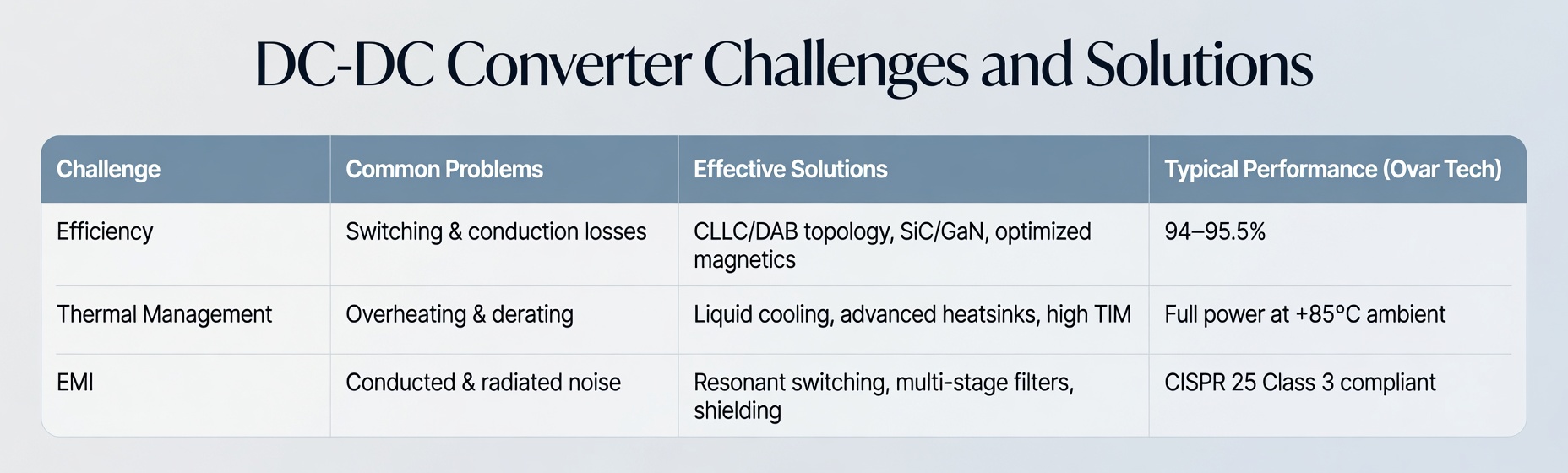
Summary Table: Challenges and Solutions
 |
Conclusion
Solving efficiency, thermal, and EMI challenges in DC-DC Converters demands a holistic system-level approach combining advanced topologies, superior components, intelligent thermal design, and rigorous EMI mitigation. Manufacturers like Ovar Tech demonstrate how these elements can be successfully integrated to deliver high-performance, reliable power conversion solutions for next-generation electric commercial vehicles, industrial machinery, and marine vessels.
By choosing optimized DC-DC converters, system integrators can achieve lower total cost of ownership, improved energy efficiency, and enhanced system reliability. As electrification accelerates globally, continued innovation in these three critical areas will remain essential for the success of high-voltage platforms ranging from 48V to 800V.
Share This Article