In Commercial Vehicles, Industrial Vehicles, or Yachts, What Special Requirements Should Be Considered for DC-DC Converters in 2025?

In Commercial Vehicles, Industrial Vehicles, or Yachts, What Special Requirements [...]
In Commercial Vehicles, Industrial Vehicles, or Yachts, What Special Requirements Should Be Considered for DC-DC Converters in 2025?
When deploying DC-DC Converters in commercial vehicles, industrial machinery, or marine vessels such as yachts, the requirements become significantly more demanding than in standard passenger EVs. These applications often involve harsh operating environments, high duty cycles, strict safety regulations, and unique power demands. Key considerations include higher vibration and shock resistance, wide temperature operation, enhanced ingress protection (IP67/IP69K), galvanic isolation, EMC compliance, and long-term reliability under continuous heavy loads.
 |
1. Environmental and Mechanical Durability
Commercial trucks, construction equipment, and yachts operate in far more aggressive conditions than passenger cars.
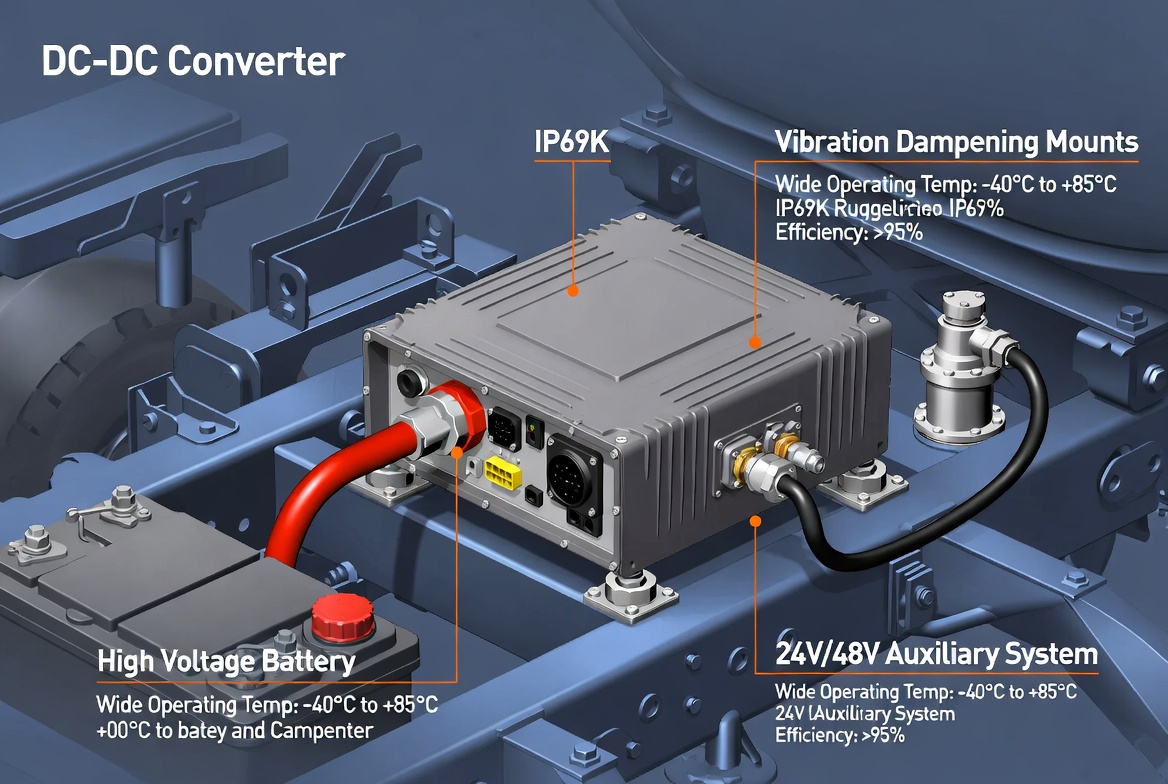
- Vibration and Shock: Vehicles frequently encounter rough roads, off-road conditions, or constant wave motion at sea. DC-DC Converters must meet strict standards such as ISO 16750-3 (vibration) and IEC 60068-2-27 (shock).
- Temperature Extremes: Operating ranges often need to cover -40°C to +85°C (or even +105°C in engine compartments). Liquid cooling or advanced air cooling becomes essential.
- Ingress Protection: IP67 is the minimum; many marine and outdoor industrial applications require IP69K to withstand high-pressure water jets and dust.
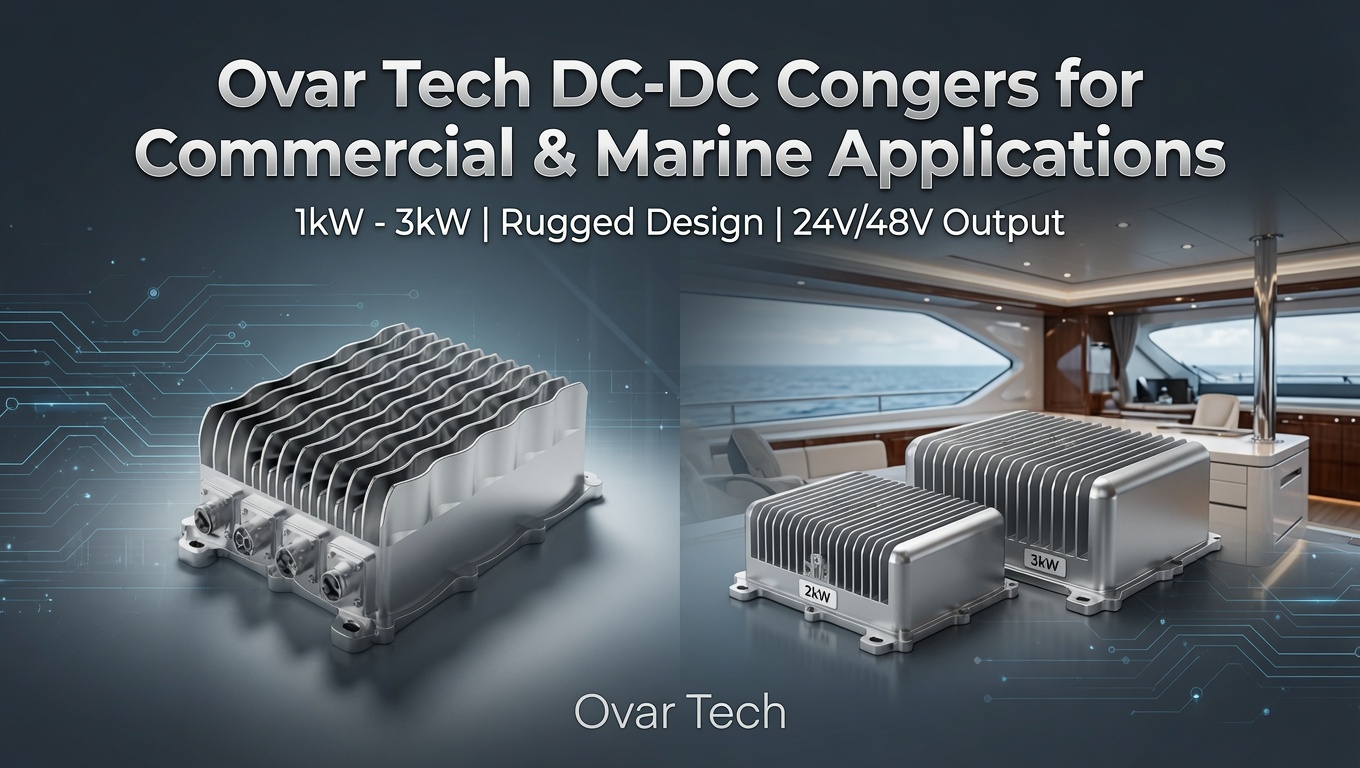
Ovar Tech addresses these challenges with its ruggedized DC-DC series (1kW–3kW), designed specifically for commercial and marine use, featuring reinforced aluminum housings and advanced potting technology for superior vibration resistance.
2. Voltage Platforms and Power Requirements
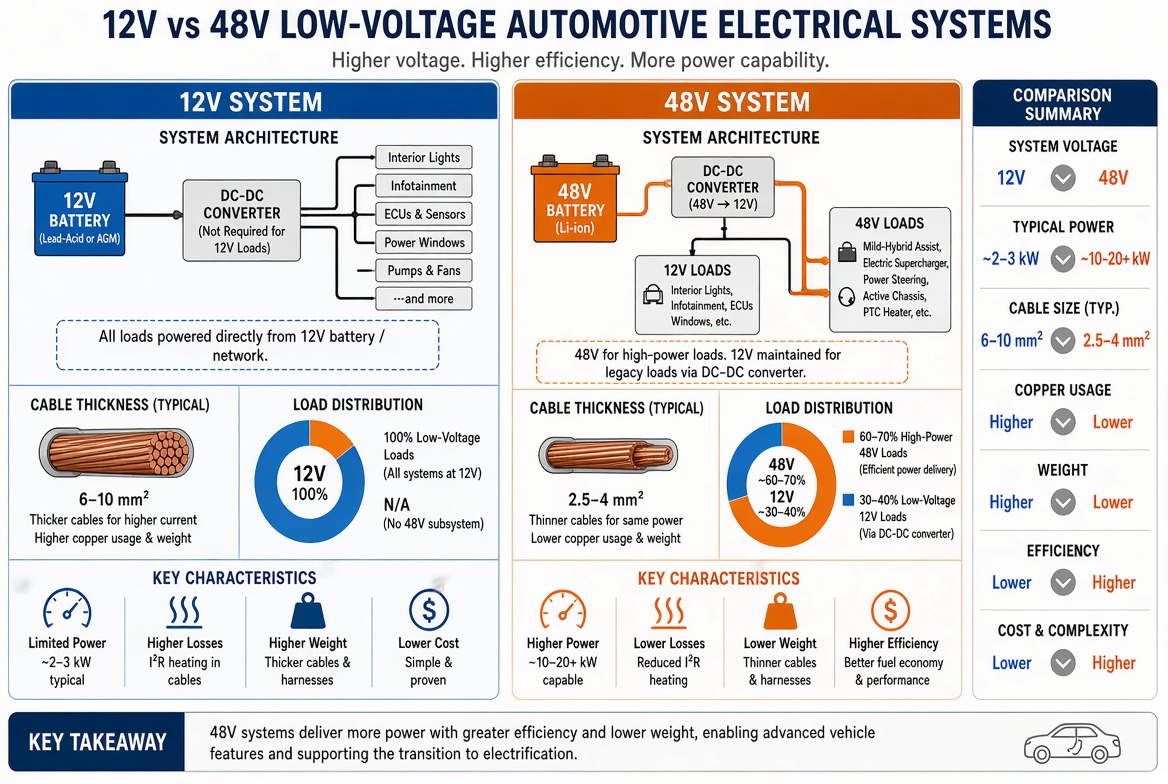
Unlike passenger cars that typically use 12V auxiliary systems, commercial vehicles and yachts often require 24V or 48V architectures to support higher power loads such as hydraulic pumps, cranes, refrigeration units, winches, and navigation systems.
- Input voltage usually ranges from 48V–800V from the main traction battery.
- Output stability is critical — voltage ripple must be kept under 1% to protect sensitive electronics.
- Peak power handling and continuous duty cycles are much higher. A delivery truck may demand sustained 2.5–3kW output for hours.
Ovar Tech’s 2kW and 3kW DC-DC Converters are popular in this segment because they support both 24V and 48V outputs with excellent load regulation and efficiency above 95%.
3. Safety and Isolation Requirements
In commercial and marine applications, galvanic isolation between high-voltage and low-voltage sides is mandatory for safety. Regulatory bodies such as ISO 26262 (ASIL-B/C) for road vehicles and DNV / ABS standards for marine vessels impose strict functional safety requirements.
Additional protections needed include:
- Reverse polarity protection
- Over-voltage, under-voltage, and short-circuit protection
- Redundant output monitoring
- High insulation resistance (>100MΩ)
Ovar Tech’s automotive-grade and marine-capable DC-DC modules incorporate reinforced isolation transformers and comprehensive protection circuits to meet these demanding safety levels.
 |
4. EMC and Noise Considerations
Heavy-duty vehicles and yachts contain numerous sensitive communication and navigation systems. DC-DC Converters must achieve high EMC performance (CISPR 25 Class 3 or higher) to avoid interfering with CAN networks, GPS, radar, or radio systems.
Ovar Tech pays special attention to EMI filtering and shielding in their commercial/marine product lines, ensuring quiet operation even in electrically noisy environments.
5. Application-Specific Requirements
Commercial Vehicles (Trucks, Buses, Vans)Need high continuous power, fast transient response for sudden load changes (e.g., when powering tail lifts), and long service life (targeting 10–15 years or 500,000+ km).
Industrial Vehicles (Forklifts, Construction Machinery)
Require extreme dust and vibration resistance, ability to handle frequent start-stop cycles, and sometimes 48V output for electric actuators.
Yachts and Marine Vessels
Demand corrosion resistance (salt spray testing per ISO 9227), waterproofing, and compliance with marine certification (e.g., ISO 8846 for ignition protection). Bi-directional capability is increasingly requested for hybrid propulsion and hotel load management.
Ovar Tech Solutions for Demanding Applications
Ovar Tech has developed specialized DC-DC Converters tailored for these markets:
- 1.5kW / 2kW / 3kW standalone units
- Integrated versions paired with 6.6kW and 11kW OBCs
- Wide input voltage (48V–800V)
- 12V / 24V output options
- Air-cooled and high-protection enclosure designs
Their products are widely used by European and Asian commercial vehicle converters and marine system integrators due to competitive pricing combined with solid reliability.
Comparison of Requirements
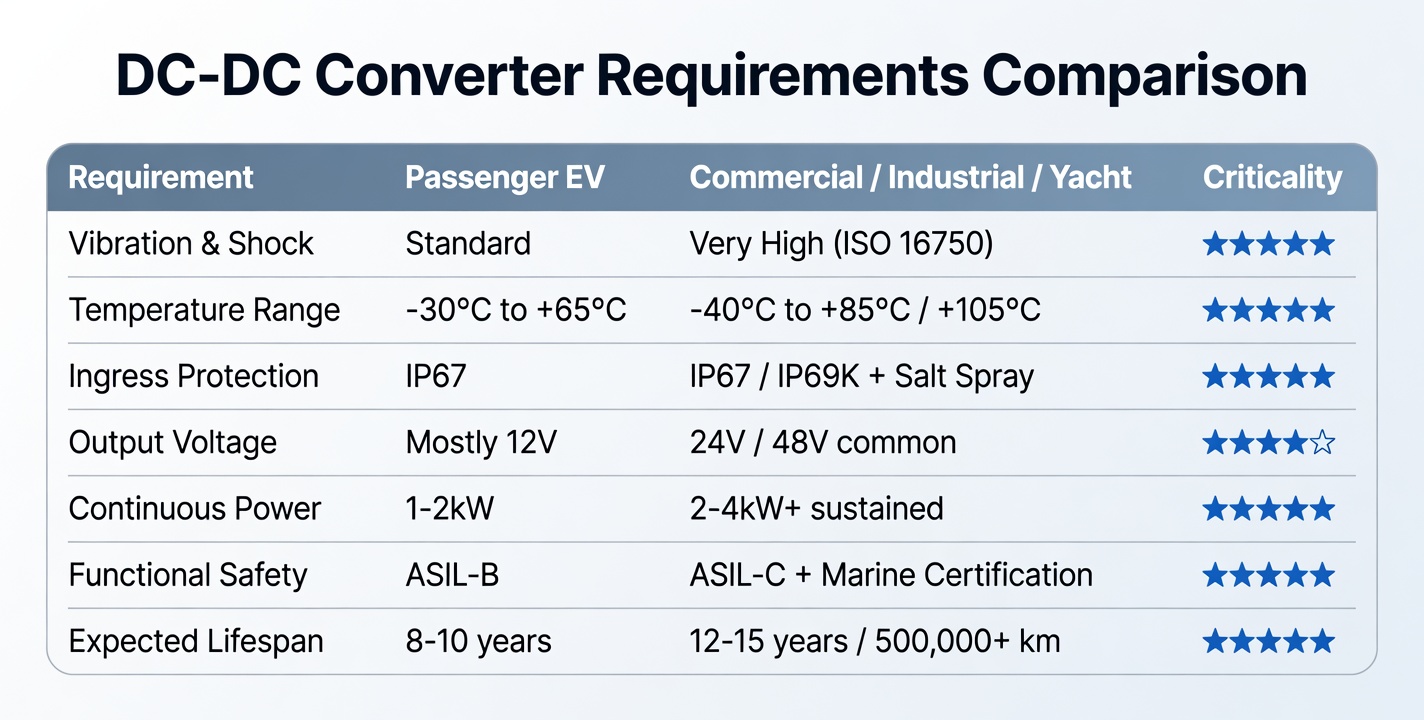 |
Conclusion
Selecting the right DC-DC Converter for commercial vehicles, industrial applications, or yachts requires careful attention to mechanical robustness, electrical isolation, thermal performance, and compliance with stringent industry standards. Unlike consumer EVs, these applications leave little room for compromise on reliability and durability.
Ovar Tech has positioned itself as a capable supplier in this space by offering rugged, high-performance DC-DC Converters and integrated solutions that balance technical excellence with commercial viability. For fleet operators, OEMs, and marine builders looking for dependable power conversion in harsh environments, carefully evaluating vibration resistance, protection ratings, and long-term reliability is essential — and Ovar Tech’s specialized product range is well worth considering.
شارك هذا المقال